Manual.ly Logo

JBL Aquaristic ProAquaTest Lab Egcheiridio-Chrisis

0,0 · 0 Αξιολογήσεις

PDF εγχειρίδιο · 65 Σελίδες

Ελληνικά

M: QW-35-FL
σελίδα

/ 65

Loading...
20bbaef5bdec311f8d8e156c4e1fe9d6e449 page 9
16 17
deciency. Iron and some other trace elements are only sta-
ble in water for a limited time, even if they are bound to so-
called chelators, as is usual in modern fertilisers. In addition
any tap water added is usually iron-free. Therefore, the iron
content needs to be monitored regularly with this test and re-
plenished if necessary. Cncentrations as low as 0.1–0.2 mg/l
are sufcient for good plant growth. In very densely planted
aquariums, values of up to 0.6 mg/l can also be useful. In
marine water, values of up to 0.05 mg/l are recommended.
Procedure:
1. Rinse both test vials several times with the water to be
tested.
2. Use the enclosed syringe to ll each of the test vials with
5 ml of sample water.
3. Add 5 drops of Fe reagent to one of the two test vials and
mix by swirling. Allow to stand for 10 minutes until the
colour has developed completely.
4. Place both test vials in the grey comparator block: Place
the vial with added reagent at the smooth end and the
vial with untreated sample water (blank sample) at the
notched end of the comparator block.
5. Place the comparator block with the two test vials on the
colour chart in such a way that the notch points to the
values and move it on the colour chart until the colour of
the sample mixed with reagents corresponds as closely
as possible to the colour under the blank sample.
6. Read the iron content in the notch of the comparator.
Note:If you decide to use the JBL PRO AQUATEST NH
4
at
the same time, make sure you don’t mix up the measuring
vessels of either set. Traces of the JBL PRO AQUATEST
NH
4
left inside the measuring vessel may result in too high
readings in the iron test.
Correcting deviating values:
Too low: Fertilise with ferrous fertilisers from the JBL ferti-
liser range (e.g. JBL Ferropol).
Too high: Carry out the corresponding partial water change.
JBL PRO AQUATEST K
Features: JBL PRO AQUATEST K is an easy-to-use turbid-
ity test for the routine monitoring of the potassium content in
fresh and marine water.
Why test? Potassium is one of the macroelements which is
very effectively absorbed within a few hours and temporarily
stored by plants in fresh water. Growing plants require more
potassium compared to other elements. As a result, potas-
sium concentrations can drop to a minimum range, causing
plant growth to stagnate, even if the aquarium water is ferti-
lised regularly. Potassium deciency initially leads to chloro-
tic spots on the edges of the leaf, which gradually increase
and then turn into grey-brown necroses. The leaves may
crinkle or curl. In Central European tap water, potassium is
usually a decient element compared to in natural biotopes
and this especially applies to calcium and magnesium con-
centrations. For good plant growth, the potassium content
needs to be at around 10 mg/l, in aquariums with high il-
lumination (e.g. in so-called scapes) up to 30 mg/l can be
useful. Higher potassium values in aquarium water encour-
age the growth of green thread algae. Potassium is present
in seawater in concentrations of about 380–400 mg/l, but is
only consumed in small quantities. Excessively high potas-
sium contents can be dangerous for sensitive animals such
as shrimps. The potassium content of the aquarium water
needs to be measured on a daily basis initially. This enables
the needs of the plants to be determined and the dosage of
the fertiliser can be carried out accordingly. Afterwards, rou-
tine measurements can be carried out after longer intervals.
Procedure:
Freshwater:
1. Rinse the measuring tube (plastic) and the tube (glass)
for the potassium content reading several times with the
water to be tested.
2. Using the syringe supplied, ll 15 ml of sample water into
the measuring tube.
3. Add 10 drops of reagent 1 and mix by swirling.
4. Add 1 large level measuring spoon (broad end of the
enclosed double-ended spoon) of reagent 2 and swivel
slightly for about 30 seconds until the powder has dis-
solved. The water becomes whitish and cloudy. Leave to
stand for 1 minute and then swirl slightly again.
5. Place the glass tube for reading the potassium content
reading on the cross of the colour card.
6. The following procedure should be carried out in bright,
diffuse light. Pour the´ turbid water from the measuring
tube into the reading tube until the turbidity means the
cross on the colour card is no longer visible from above.
7. The potassium content can now be read on the scale of
the tube (bottom of the meniscus).
Marine water:
1. Fill 10 ml sample water with distilled water to 300 ml.
2. Follow the same steps as for fresh water.
3. Multiply the test result by a factor of 30.
Correcting deviating values:
Too low: In freshwater aquariums fertilise with potassium-
containing fertilisers from the JBL ProScape range. We do
not recommend an additional dosage in marine water be-
cause potassium is toxic for various organisms.
Too high: Repeat the measurement after 24 hours. If the
value is still too high, carry out the corresponding partial
water change.
JBL PRO AQUATEST Cu
Features: JBL PRO AQUATEST Cu is an easy-to-use color-
imetric test to routinely determine the copper content in fresh
and marine water aquariums, and in garden ponds. A com-
pensation method developed by JBL allows reliable results
to be obtained even in slightly discoloured water (caused by
peat ltering or disease treatment etc.).
Why test? Copper is a heavy metal which is on the one
hand indispensable as a trace element for plant and animal
organisms. On the other hand it has a devastating effect
as a cell poison (cytotoxin) above a certain concentration.
Copper mainly reaches the aquarium in tap water, as cop-
per pipes were often used for water installation. If the water
remains in such pipes for a longer period of time, consid-
erable amounts of copper can dissolve. The water in the
pipe should therefore be drained before use. For the same
reason, do not use rainwater that has owed over copper
gutters. And make sure the tools you use when setting up
your aquarium or pond are copper-free. A controlled entry
of copper takes place through the application of medications
against parasitic sh diseases, as well as with some algae-
killing agents. The copper concentrations prescribed for this
can be tolerated by sh for a certain time while parasites,
etc., start dying off immediately.
Please note: Copper quickly forms water-insoluble com-
pounds which form deposits on the ground. The JBL PRO
AQUATEST Cu only detects copper dissolved in water.
Procedure:
1. Rinse both test vials several times with the water to be
tested.
2. Use the enclosed syringe to ll each of the test vials with
5 ml of sample water.
3. Add 5 drops of reagent 1 to one of the two test vials and
mix by swirling. Then add 5 drops of reagent 2 and mix
again. Allow to stand for 15 minutes until the full colouring
develops.
4. Place both test vials in the grey comparator block: Place
the vial with added reagent at the smooth end and the
vial with untreated sample water (blank sample) at the
notched end of the comparator block.
5. Place the comparator block with the two test vials on the
colour chart in such a way that the notch points to the
values and move it on the colour chart until the colour of
the sample mixed with reagents corresponds as closely
as possible to the colour under the blank sample.
6. Read the copper content in the notch of the comparator.
Correcting deviating values:
Too low: The value should always remain below the detec-
tion limit (except for some special treatments).
Too high: Regular use of JBL water conditioners, such as
JBL Biotopol or ltering with JBL’s high performance acti-
vated carbon. Water-insoluble copper compounds can only
be eliminated by removing the complete substrate.
JBL PRO AQUATEST O
2
Features: JBL PRO AQUATEST O
2
is an easy-to-use colori-
metric test for the routine monitoring of the oxygen content
in fresh and marine water aquariums, and in tap and garden
pond water, within a range of 1–10 mg/l (ppm).
Why test? All animals living in water need oxygen to
breathe. Even the „invisible helpers“ in aquariums and
ponds, the cleansing bacteria, are dependent on a suf-
cient oxygen content for the conversion of ammonium to
nitrate. The oxygen supply they need can be safeguarded
by adequate planting. In aquariums and ponds with little or
no planting and in marine aquariums, the oxygen content
always needs to be kept at the appropriate saturation value
with the help of technical equipment. The saturation value
depends on the water temperature (see table on last page).
Plants are able to exceed this saturation value through their
assimilation activity. In well planted aquariums and ponds,
for example, values can be found towards the end of the
lighting period, which are 1 to 2 mg/l higher than the satura-
tion value.
Procedure:
1. Rinse the measuring vessel several times with the water
to be tested.
2. Fill the measuring vessel to the brim with the water to be
tested by immersing it in water and place it on a water-
proof surface.
3. Add 6 drops of O
2
reagent 1 and 6 drops of O
2
reagent
2 slowly one after the other, until the measuring vessel
overows.
4. Avoiding bubble formation, close the measuring vessel
bubble-free with the enclosed cap and shake vigorously
for approx. 30 seconds.
5. Remove the cap from the measuring vessel and add 6
drops of O
2
Reagent 3.
6. Close the measuring vessel again (bubbles no longer
matter) and shake vigorously for approx. 30 seconds. Al-
low to stand for 10 minutes until the full colouring devel-
ops.
7. Move the measuring vessel back and forth approx. 3–5
cm above the white part of the colour chart and select the
colour with the best possible match.
8. Read the oxygen content off the relevant colour eld.
Correcting deviating values:
Too low: Put in more plants and/or improve care of exist-
ing plants, e.g. by installing a CO
2
supply unit (JBL ProFlora
CO
2
kit). Improve ventilation, e.g. with a JBL ProSilent air
pump and/or improve water movement on the surface with
ow pumps, protein skimmers (marine water) or in garden
ponds with stronger pumps (pond lters) in conjunction with
a waterfall or watercourse.
Too high: Not applicable.
JBL PRO AQUATEST CO
2
Direct
Features: JBL PRO AQUATEST Ca is an easy-to-use titra-
tion test to determine the carbon dioxide content of fresh-
water.
Why test? Carbon dioxide (CO
2
) is the most important plant
nutrient. The consumption of CO
2
differs from aquarium to
aquarium and depends, amongst other things, on the fol-
lowing factors: number and demands of plants, carbonate
hardness, water movement and light. Fertilisation with CO
2
is usually done with a CO
2
fertiliser system. In the aquarium
water, a CO
2
content between 15 and 30 mg / l is recom-
mended. This range is safe for sh and at the same time en-
sures luxuriant plant growth. 20–25 mg/l CO
2
has proven to
be ideal. In special aquariums with a large number of plants,
so-called scapes, higher values of up to 35 mg/l may be re-
quired. With this test you can determine the CO
2
content of
your aquarium water in mg/l and thus monitor the setting of
your CO
2
fertiliser system.
Please note: When fertilising with so-called liquid carbon,
fertiliser monitoring with JBL PRO AQUATEST CO
2
Direct is
not possible because these fertilisers do not contain CO
2
but
other carbon compounds.
Procedure:
1. Rinse the measuring vessel and syringe several times
with the water to be tested.
2. Using the syringe, insert 20 ml of bubble-free sample
water into the measuring tubes.
3. Place the measuring tube on both elds of the enclosed
colour chart.
4. Pour 5 drops of reagent 1 into the measuring tube on the
white eld and swirl it until it is mixed.
5. Add reagent 2 drop by drop. After each drop, swirl and
count the drops until a pink colour is obtained which re-
mains stable for 60 seconds and corresponds to the col-
our in the second measuring tube on the pink colour eld.
To compare the colours, look into the tubes from above.
6. The number of drops multiplied by 2 gives the carbon di-
oxide content in mg/l. Example: 10 drops of reagent 2 =
20 mg/l CO
2
.
Since other acids in the water impair the measurement, a
blank value must also be determined. To do this, take a wa-
ter sample of 100 ml and aerate it for 15 min using a JBL
ProSilent air pump with an air stone. Then determine the
blank value according to the instructions given above.
Result–blank value = actual carbon dioxide concentration
in mg/l.
Correcting deviating CO
2
values:
Too low: Add carbon dioxide to the aquarium using a JBL
ProFlora CO
2
fertiliser system.
Too high: Aerate the aquarium using a JBL ProSilent air
pump.
CO
2
table
Special feature: The CO
2
table enables you to determine
the carbon dioxide content through the carbonate hardness
(KH) and the pH value of the water. This method should only
be used if no pH-lowering substances, such as nitrate or
peat, are in the water.
Why test?
Carbon dioxide (CO
2
) is the most important plant nutrient.
The consumption of CO
2
differs from aquarium to aquarium
and depends, amongst other things, on the following factors:
number and demands of plants, carbonate hardness, water
movement and light. Fertilisation with CO
2
is usually done
en
en
en
en
en

Συνομιλήστε με το εγχειρίδιο του JBL Aquaristic ProAquaTest Lab σας με τη βοήθεια Τεχνητής Νοημοσύνης

Λάβετε άμεσες απαντήσεις από Τεχνητή Νοημοσύνη από το εγχειρίδιο του JBL Aquaristic ProAquaTest Lab σας

Ρωτήστε οτιδήποτε σχετικά με το JBL Aquaristic ProAquaTest Lab. Οι απαντήσεις προέρχονται από αυτό το εγχειρίδιο, με τις σελίδες στις οποίες βασίζονται.

ProAquaTest Lab Πρόγραμμα συντήρησης

Καθημερινά
Μέτρηση περιεκτικότητας σε μαγνήσιο σε ενυδρείο γλυκού νερού

Αρχικά μετρήστε καθημερινά για να προσδιορίσετε τις ανάγκες των φυτών και τη δοσολογία λιπάσματος. Μετά από αυτό, μεταβείτε σε μεγαλύτερα διαστήματα.

Καθημερινά
Μέτρηση περιεκτικότητας σε κάλιο σε ενυδρείο γλυκού νερού

Αρχικά μετρήστε καθημερινά για να προσδιορίσετε τις ανάγκες των φυτών και τη δοσολογία λιπάσματος. Μετά από αυτό, μεταβείτε σε μεγαλύτερα διαστήματα.

M: qwen/qwen3.8-flash

Κάντε μια Ερώτηση

0/1000

Προτείνετε το ProAquaTest Lab;

Ναι Όχι

Frequently Asked Questions

A

Ασφαλίστε ακριβή αποτελέσματα πλένοντας όλα τα σκεύη πολλές φορές με νερό δείγματος πριν τη δοκιμή. Κρατήστε σταγονόμετρα κάθετα για να αποφύγετε φυσαλίδες αέρα. Ακολουθήστε τους ειδικούς χρόνους αναμονής για εξέλιξη χρώματος. Συγκρίνετε χρώματα ενάντια στον πίνακα σε λευκό φόντο. Χρησιμοποιήστε τα παρεχόμενα σύριγγες και μπλοκ συγκριτική για συνεχείς όγκους.

Είναι αυτή η απάντηση χρήσιμη;

A

Οι διακυμάνσεις στο pH μπορούν να βλάψουν τους υδάτινους οργανισμούς. Οι ξαφνικές αλλαγές είναι ιδιαίτερα στρεσσογόνες. Το χρωματισμένο νερό μπορεί να επηρεάσει τις αναγνώσεις αλλά οι μέθοδοι αντιστάθμισης βοηθούν. Πάντοτε μετρήστε την ίδια ώρα της ημέρας καθώς το φως επηρεάζει επίπεδα CO2 και pH. Αποφύγετε τη δοκιμή αμέσως μετά την προσθήκη χημικών ή τροφής.

Είναι αυτή η απάντηση χρήσιμη;

A

Ελέγξτε κρίσιμες παραμέτρους όπως pH και αμμωνία τακτικά ειδικά σε νέες εγκαταστάσεις. Δοκιμάστε θρεπτικά συστατικά όπως νιτρικό και φωσφορικό μηνιαία μία φορά που το σύστημα είναι σταθερό. Ελέγξτε GH και KH εβδομαδιαία για να παρακολουθήσετε τάσεις σκληρότητας. Δοκιμάστε επίπεδα οξυγόνου αν τα ψάρια δείξουν σημάδια δυσφορίας ή σε βαριά φορτωμένα ενυδρεία. Η συχνότητα εξαρτάται από την πυκνότητα φόρτωσης και το μέγεθος της δεξαμενής.

Είναι αυτή η απάντηση χρήσιμη;

A

Ναι το εγχειρίδιο καλύπτει ενυδρεία γλυκού νερού, θαλάσσια ενυδρεία και λίμνες κήπου. Υπάρχουν ειδικές δοκιμές για λίμνες Koi με υψηλή πυκνότητα πληθυσμού. Γενικές δοκιμές σκληρότητας και pH ισχύουν για τα περισσότερα περιβάλλοντα γλυκού νερού. Δοκιμές CO2 είναι συγκεκριμένες για φυτευμένα ενυδρεία με ενεργή κύκλο ανάπτυξης φυτών.

Είναι αυτή η απάντηση χρήσιμη;

A

Η υψηλή αμμωνία δείχνει πρόβλημα βιολογικού φίλτρου. Εκτελέστε μια μεγάλη αλλαγής νερού αμέσως. Προσθέστε ευεργετικά βακτήρια για να αποκαταστήσετε τον κύκλο αζώτου. Ελέγξετε αν τα φάρμακα που χρησιμοποιήθηκαν πρόσφατα βλάψατε ευεργετικά βακτήρια. Βεβαιωθείτε ότι η σίτιση μειώθηκε μέχρι τα επίπεδα να επιστρέψουν σε ασφαλή όρια. Παρακολουθήστε το pH καθώς επηρεάζει τα επίπεδα τοξικότητας αμμωνίας.

Είναι αυτή η απάντηση χρήσιμη;

A

Διορθώστε την χαμηλή ανθρακική σκληρότητα προσθέτοντας σταθεροποιητές νερού JBL περιέχοντες υδρογονάνθρακες. Μπορείτε επίσης να χρησιμοποιήσετε μίγματα άλατα σχεδιασμένα για ενυδρεία. Αποφύγετε μαλάκυνση νερού αν είναι ήδη πολύ χαμηλό. Παρακολουθήστε στενά μετά την προσαρμογή για να αποφύγετε διακυμάνσεις pH. Επανα-δοκιμάστε μετά από 24 ώρες για να επιβεβαιώσετε σταθερότητα.

Είναι αυτή η απάντηση χρήσιμη;

A

Αποθηκεύστε αντιδραστήρες στεγνά σε θερμοκρασία δωματίου στην αρχική τους συσκευασία. Κρατήστε τους μακριά από άμεσο ηλιακό φως και πηγές θερμότητας. Βεβαιωθείτε τα σταγονόμετρα είναι στεγνά εξωτερικά πριν επιστρέψουν σε μπουκάλια. Μην αναμιγνύετε καπάκια μεταξύ διαφορετικών σετ δοκιμών. Ελέγξτε ημερομηνίες λήξης τακτικά καθώς παλαιότερα αντιδραστήρες μπορεί να δώσουν ανακριβή αποτελέσματα.

Είναι αυτή η απάντηση χρήσιμη;

M: QW-35-FL

Πλεονεκτήματα και Μειονεκτήματα

Πλεονεκτήματα

  • Ολοκληρωμένη σειρά δοκιμών που καλύπτουν όλες τις βασικές παραμέτρους για ποικίλα υδάτινα συστήματα συμπεριλαμβανομένου γλυκό νερό, θαλάσσιο νερό και λίμνες κήπου
  • Εξελιγμένη τεχνολογία αντιστάθμισης διασφαλίζει αξιόπιστα αποτελέσματα ακόμα και σε νερό χρωματισμένο από φιλτράρισμα τύρφης ή θεραπείες
  • Αναλυτικές διαδικασίες ελαχιστοποιούν το σφάλμα χρήστη και περιλαμβάνουν οπτικές βοηθήσεις όπως γραφήματα χρωμάτων για εύκολη ερμηνεία των μετρήσεων
  • Οι αντιδραστήρες είναι σταθεροί και αποτελεσματικοί όταν αποθηκεύονται σωστά επιτρέποντας μακροπρόθεσμη συνετή παρακολούθηση της χημείας του νερού
  • Ειδικά εργαλεία που παρέχονται απλοποιούν τη διαδικασία δοκιμής καθιστώντας την προσβάσιμη για αρχάριους ενώ παραμένουν ακριβή για ειδικούς
VS

Μειονεκτήματα

  • Ορισμένες δοκιμές απαιτούν ανάγνωση χρώματος μέσα σε 15 λεπτά για να διασφαλιστεί η ακρίβεια πριν αλλάξει το χρώμα της λύσης
  • Οι χρήστες πρέπει να βεβαιούνται ότι τα δοχεία δοκιμής δεν αναμειγνύονται μεταξύ διαφορετικών σετ δοκιμών για να αποφευχθεί διασταυρούμενη μόλυνση δειγμάτων
  • Η ακρίβεια εξαρτάται από προσεκτική απαρίθμηση στάγδην και κράτηση σταγονόμετρων κάθετα που απαιτεί προσοχή στη λεπτομέρεια
  • Η διόρθωση υψηλών επιπέδων τοξινών συχνά απαιτεί άμεσες αλλαγές νερού μεγάλου όγκου που μπορεί να είναι ενοχλητικές
  • Οι αντιδραστήρες μπορεί να επιδεινωθούν με τον καιρό αν δεν αποθηκευτούν στην αρχική συσκευασία μακριά από πηγές θερμότητας και υγρασίας
M: QW-35-FL

Προϊόν Προδιαγραφές

Σειρά

Τιμές Νερού

Τύπος

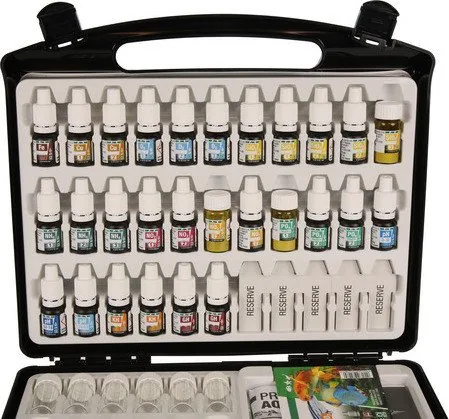
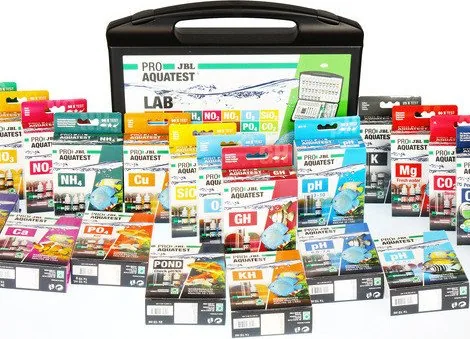
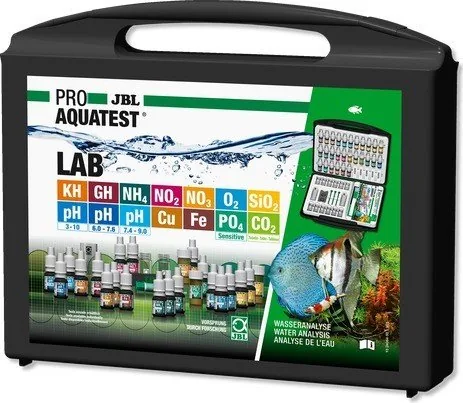
Έλεγχος Νερού (pH (3 Κλίμακες), Ανθρακική Σκληρότητα, Συνολική Σκληρότητα, Φωσφορικά, Νιτρώδη, Νιτρικά, Σίδηρος, Χαλκός, Πυριτικά, Οξυγόνο, Αμμώνιο, Αμμωνία, Έμμεσο CO2), Σετ Ελέγχου

Διαστάσεις

38,20x8,51x31,80cm (ΠxΥxΒ)

Βάρος

1,27 kg

M: QW-35-FL

Περιγραφή Προϊόντος

Αξιοποίηση της Χημείας του Ενυδρείου

Η συντήρηση ενός υγιούς υδάτινου περιβάλλοντος απαιτεί ακριβή παρακολούθηση της χημείας του νερού για την εξασφάλιση της υγείας όλων των οργανισμών που κατοικούν εντός αυτού. Το εγχειρίδιο του JBL Pro AquaTest Lab Test Case παρέχει απαραίτητες οδηγίες για χόμπυ που απαιτούν αρίστευση στα υδάτινα συστήματά τους για τη διατήρηση κορυφαίας κατάστασης. Αυτό το ολοκληρωμένου σετ διασφαλίζει ότι οι ψάρια και τα φυτά σας θα ευημερούν σε βέλτιστες συνθήκες παρέχοντας αναλυτικές οδηγίες για διάφορες μεθόδους ανάλυσης που χρησιμοποιούνται σήμερα.

Βασικές Μέθοδοι Δοκιμής για Διαύγεια

Η ποιότητα του νερού καθορίζει την επιτυχία οποιουδήποτε ενυδρείου. Ενεξάρτητα αν διατηρείτε υφάλμυρη ζωή ή κιόι κήπου οι διάφορες παράμετροι χρειάζονται συγκεκριμένη προσοχή για σταθερότητα. Το εγχειρίδιο περιγράφει εξελιγμένες μεθόδους τιτλοδότησης και χρωματομετρίας σχεδιασμένες για ακρίβεια και ευκολία χρήσης. Δοκιμές τιτλοδότησης όπως το KH και GH χρησιμοποιούν ακριβείς μετρήσεις στάγδην για να προσδιορίσουν τα επίπεδα σκληρότητας αποτελεσματικά. Δοκιμές χρωματομετρίας όπως οι για pH και απαραίτητα θρεπτικά συστατικά βασίζονται σε χρωματικούς πίνακες για καθαρά και αναγνώσιμα αποτελέσματα για γρήγορους ελέγχους. Κάθε δοκιμή περιλαμβάνει βήμα προς βήμα οδηγίες για να ελαχιστοποιήσουν το σφάλμα χρήστη κατά τη διαδικασία δοκιμής δειγμάτων νερού. Το σύστημα αντισταθμίζει αποτελεσματικά την αλλαγή χρώματος νερού που προκαλείται από φιλτράρισμα τύρφης ή θεραπεία εξασφαλίζοντας αξιοπιστία ακόμα και σε δύσκολες συνθήκες.

Βασικές Παράμετροι Υγείας

Η κατανόηση του προφίλ του νερού σας είναι κρίσιμη για την πρόληψη επικίνδυνων διακυμάνσεων που βλάπτουν ευαίσθητα πλάσματα. Δοκιμές σκληρότητας όπως το Pro AQUATEST GH και KH αποτρέπουν επικίνδυνες διακυμάνση pH που βλάπτουν σημαντικά ευαίσθητα πλάσματα. Τα επίπεδα pH μεταξύ συγκεκριμένων περιοχών ταιριάζουν σε διαφορετικά είδη από όξινο γλυκό νερό έως αλκαλικά θαλάσσια ενυδρεία τέλεια. Η δοκιμή θρεπτικών συστατικών παρακολουθεί πολύπλοκους κύκλους αζώτου όπως αμμωνία, και νιτρώδη και νιτρικά για να παρακολουθήσει τη λειτουργία του συστήματος με ακρίβεια. Τα επίπεδα φωσφορικών και πυριτικών βοηθούν στην πρόληψη επίμονων ανθέων φύκων που μπορούν να στραγγίσουν το ενυδρείο σας και να σκοτώσουν ψάρια. Στοιχεία ίχνη όπως ο σίδηρος και το χαλκό είναι ζωτικά για την ανάπτυξη αλλά πρέπει να ελέγχονται αυστηρά για να αποφύγετε κινδύνους τοξικότητας. Τα επίπεδα οξυγόνου διασφαλίζουν αναπνοή για ψάρια και βακτήρια καθώς η συμπλήρωση CO2 βοηθά την πλούσια ανάπτυξη φυτών σε φυτευμένα ενυδρεία.

Συντήρηση και Διορθώσεις για Σταθερότητα

Η διατήρηση των παραμέτρων σταθερή αποφεύγει το στρες και τις επιδημίες ασθενειών στο οικοσύστημα σας μακροπρόθεσμα. Αν οι τιμές αποκλίνουν από τις προτεινόμενες περιοχές η οδηγία προσφέρει συγκεκριμένα βήματα διορθώσεων για προσαρμογή να διορθώσει προβλήματα. Πολύ χαμηλή σκληρότητα απαιτεί την προσθήκη ανόργανων αλάτων ενώ η υπερβολική προτείνει τη χρήση φιλτραρίσματος αντιστρόφου όσμωση για να το μειώσετε. Η έλλειψη θρεπτικών συστατικών χρειάζεται συγκεκριμένα λιπάσματα από τη σειρά ProScape διαθέσιμα για αγορά online εύκολα. Υψηλά επίπεδα τοξινών απαιτούν άμεσες αλλαγές νερού ή εισαγωγή βιολογικών φίλτρων για να αποκαταστήσουν την ισορροπία γρήγορα. Οι οδηγίες αποθήκευσης διασφαλίζουν ότι οι αντιδραστήρες παραμένουν αποτελεσματικοί για μελλοντικές περιόδους δοκιμών πριν λήξουν. Οι σταγονόμετροι πρέπει να κρατιούνται κάθετα για να αποφευχθούν φυσαλίδες αέρα κατά την τροφοδοσία των αντιδραστήρων. Η τακτική παρακολούθηση αποτρέπει απρόοπτες εκπλήξεις στην routine συντήρησης των δεξαμενών σας. Ακολουθώντας τις οδηγίες εγχειριδίου του JBL Pro AquaTest Lab Test Case οι ιδιοκτήτες ενυδρείων μπορούν να επιτύχουν διαύγεια και σταθερότητα νερού για τα κατοικίδια τους.

M: QW-35-FL

© Copyright 2026 Manual.ly